Written by Dn. Ananias Ananievski, a deacon of the Greek Orthodox Church.
The vocation of marriage is witnessed as a “a Great Mystery” but it is important to note that marriage is not mysterious. Why do people get married? What is the purpose of marriage; and what does it mean to be a husband and wife? Marriage has a vitally important salvific purpose; it is an arena where the couple work on their virtues in a pathway of deification, becoming closer to God. Man was created as male and female to recreate between them the icon of the loving bond of the Holy Trinity, that goes beyond the sexual instinct. It is through the union in the flesh within marriage that God has given us, not only procreation, but one of many means and opportunities for each couple to become more closely united to each other, and ultimately to Christ Himself; in a union that transcends all flesh. Through all aspects of marriage, Christ is ultimately leading us to another wedding, a chaste one, with Him, the Bridegroom of the Church. In order for a marriage to be fruitful, and everlasting and achieve what God intended it to be, the Sacrament of Matrimony must be approached with the proper Orthodox Christian attitude and understanding.
As the majority of people choose the high vocational path of the wedded state, called by the Holy Fathers as “the harbor of chastity” there are too few resources dedicated to acquainting the contemporary reader with the Orthodox Christian understanding of marriage: the role, purpose, and obligation of the spouse; and how Holy Matrimony is a salvific pathway, that is created by God and blessed by the Church, lending to holiness and deification.
The intent of this thesis is to raise the vision of Orthodox Christian marriage as it is understood, celebrated, and proclaimed by the Church. This paper does not pretend to be a complete in the treatment of this complex and multifaceted subject. The high, beautiful, and majestic vision of marriage may appear to the casual observer as a lofty and unattainable ideal, and therefore discardable for its impracticality. However, marriage in the Lord cannot be viewed or understood apart from the new life in Christ.
This thesis is symbolically divided into three distinct chapters (symbolising Christ being united to the husband and wife) and in this way transforming their unity into an unbreakable bond. Chapter One of this paper presents foundational teachings of the Church on marriage, which include the Old Testament and Christian understandings of Marriage, the Service Order of Holy Matrimony, and the Christocentric view of Marriage. Chapter Two unpacks the notion and understanding of love within marriage, maturity and growth in love, the equality of husband and wife, marital love as a metaphor for Christ’s love for His Church; and the virtue of chastity and monastic values as appropriate for all. The final chapter, Chapter Three covers the more practical topics within the daily life of marriage, such as the eternal character of marriage, the high and Holy calling of understanding the roles of being a husband and wife, the importance of having a shared spiritual life, the gift of children and the family unit, and communication within marriage.
Written by Dn. Ananias Ananievski, a deacon of the Greek Orthodox Church.
The vocation of marriage is witnessed as a “a Great Mystery” but it is important to note that marriage is not mysterious. Why do people get married? What is the purpose of marriage; and what does it mean to be a husband and wife? Marriage has a vitally important salvific purpose; it is an arena where the couple work on their virtues in a pathway of deification, becoming closer to God. Man was created as male and female to recreate between them the icon of the loving bond of the Holy Trinity, that goes beyond the sexual instinct. It is through the union in the flesh within marriage that God has given us, not only procreation, but one of many means and opportunities for each couple to become more closely united to each other, and ultimately to Christ Himself; in a union that transcends all flesh. Through all aspects of marriage, Christ is ultimately leading us to another wedding, a chaste one, with Him, the Bridegroom of the Church. In order for a marriage to be fruitful, and everlasting and achieve what God intended it to be, the Sacrament of Matrimony must be approached with the proper Orthodox Christian attitude and understanding.
As the majority of people choose the high vocational path of the wedded state, called by the Holy Fathers as “the harbor of chastity” there are too few resources dedicated to acquainting the contemporary reader with the Orthodox Christian understanding of marriage: the role, purpose, and obligation of the spouse; and how Holy Matrimony is a salvific pathway, that is created by God and blessed by the Church, lending to holiness and deification.
The intent of this thesis is to raise the vision of Orthodox Christian marriage as it is understood, celebrated, and proclaimed by the Church. This paper does not pretend to be a complete in the treatment of this complex and multifaceted subject. The high, beautiful, and majestic vision of marriage may appear to the casual observer as a lofty and unattainable ideal, and therefore discardable for its impracticality. However, marriage in the Lord cannot be viewed or understood apart from the new life in Christ.
This thesis is symbolically divided into three distinct chapters (symbolising Christ being united to the husband and wife) and in this way transforming their unity into an unbreakable bond. Chapter One of this paper presents foundational teachings of the Church on marriage, which include the Old Testament and Christian understandings of Marriage, the Service Order of Holy Matrimony, and the Christocentric view of Marriage. Chapter Two unpacks the notion and understanding of love within marriage, maturity and growth in love, the equality of husband and wife, marital love as a metaphor for Christ’s love for His Church; and the virtue of chastity and monastic values as appropriate for all. The final chapter, Chapter Three covers the more practical topics within the daily life of marriage, such as the eternal character of marriage, the high and Holy calling of understanding the roles of being a husband and wife, the importance of having a shared spiritual life, the gift of children and the family unit, and communication within marriage.

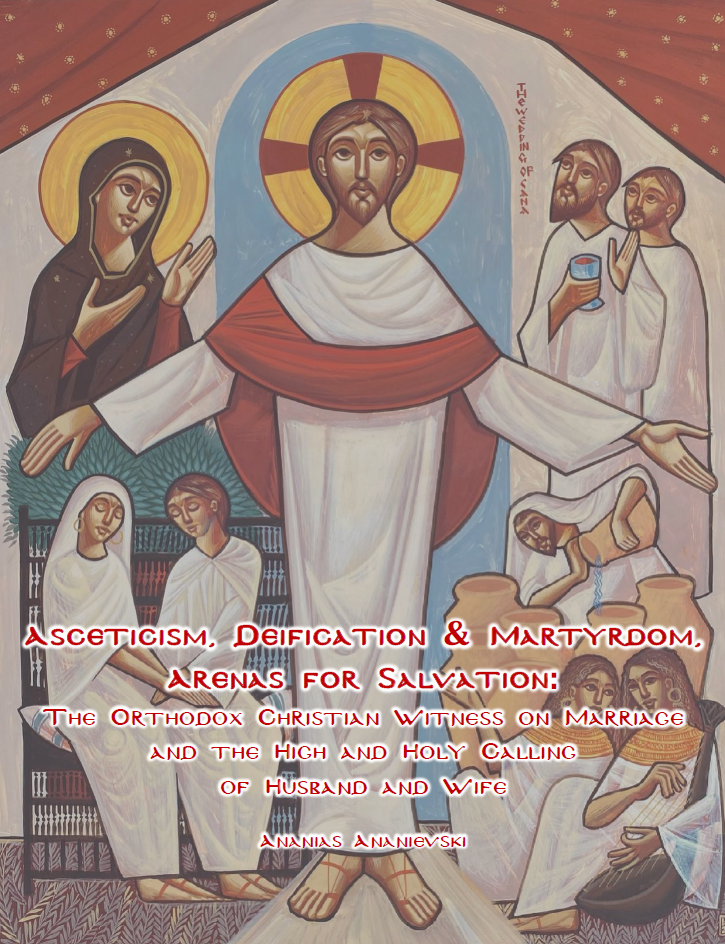 Image 1 of 2
 Image 2 of 2